
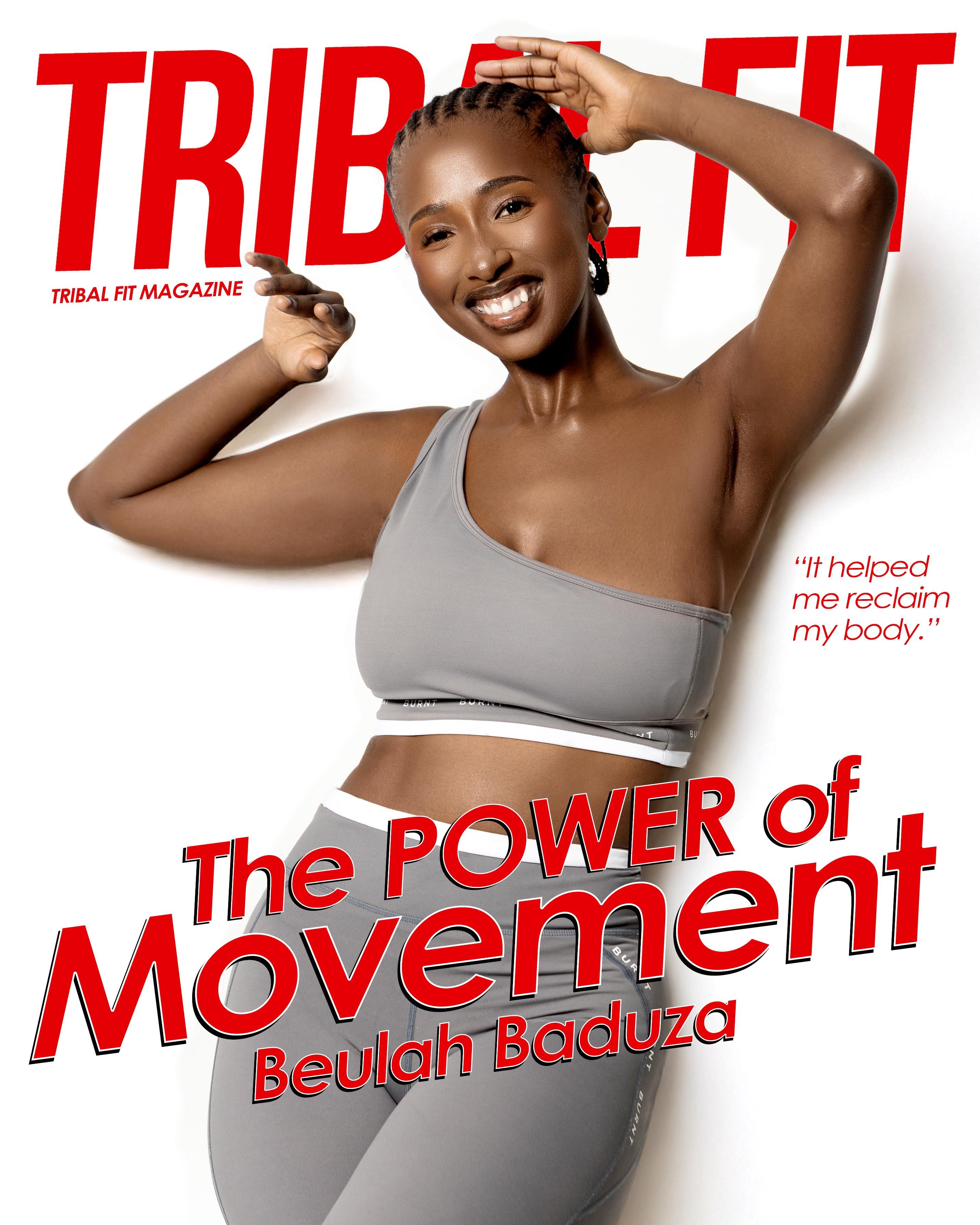

# The Power of Movement
**For Beulah Baduza, fitness has become a relationship with herself. Through walking, moments of uncertainty and the stubborn dreams of her younger self, she is learning what it means to feel strong in her own skin.**
Beulah Baduza’s relationship with movement began with a BlackBerry.
She was in Grade 11. Her mother, already committed to keeping fit, wanted her daughter to start exercising. Beulah wanted the latest phone. A deal was made.
“I agreed, obviously,” she says. “It was the latest BlackBerry.”
She started with 100 skips. Over time, those became more, eventually reaching 5,000. Somewhere along the way, the reward changed. She began enjoying how her body felt. Exercise found a place in her routine, and what had started as an incentive became something she wanted to keep.
Years later, movement holds a much deeper place in her life. It gives her somewhere to put her restless energy, a way to meet uncertainty and a growing appreciation for the body carrying her through it all.
But that beginning matters. Even a relationship that changes your life can start with something ordinary.
Sometimes, you begin because you want a phone. You keep going because you discover something worth showing up for.
For Beulah, that discovery continues on her walks.
She describes a life filled with ambition: studying, practising law, modelling, exploring entrepreneurship and following the things that make her feel alive. There is excitement in having so many possibilities. There is also pressure.
Funding does not always arrive. People do not always follow through. Working hard cannot guarantee that everything will unfold as planned.
“It can feel like life is in charge of you and you’re not in charge of it,” she says.
Walking gives her a part of the day she can participate in on her own terms. She notices the trees, the sky, the traffic. Her attention begins to stretch beyond the thoughts demanding so much of her.
The world becomes bigger than whatever is worrying her.
“When everything in life feels uncertain, movement is the only thing that stabilizes me.”
She speaks openly about living with anxiety, depression and ADHD, and about how overwhelming it can feel to have ideas and ambitions without always being able to act on them. In her experience, walking, yoga and Pilates have helped her feel grounded and better able to approach the day.
Some walks happen through tears.
That detail stays with you. Beulah does not always step outside feeling positive or prepared. Sometimes she is anxious. Sometimes she is overwhelmed. She brings those feelings with her.
“The act of doing something outside of how I’m feeling in my mind … brings me back to myself,” she says.
This is her account of what helps her navigate her mental health, rather than a prescription for someone else. What comes through is the value she finds in having somewhere to begin when everything feels difficult to hold.
A walk offers her a familiar action. A stretch gives her something immediate to focus on. Movement helps her feel involved in her life again.
“It helped me reclaim my body.”
That sense of ownership reaches into the way she understands confidence.
As a model, Beulah knows that appearance can occupy a great deal of attention. She also remembers being younger and wanting to be attractive, wanting to look a certain way. Over time, her interest in her body has become more curious and more generous.
What does she enjoy? How does she feel? Does she want to walk, take a Pilates class or rest?
Listening to those answers has allowed her to settle into herself.
“When I took my focus away from achieving goals, sort of, to just enjoying my body … then I was able to settle in and not be in a rush.”
There is relief in that sentence. So much of the conversation around women’s fitness comes with urgency: change this, improve that, reach the next milestone. Beulah describes the satisfaction of getting to know the body she already lives in.
She values being able to join a hike or try a class with confidence in her abilities. Strength gives her a sense of agency. Caring for her body has become a relationship she can feel working both ways.
“My body is like literally my best friend.”
Now in her thirties, she questions the idea that her best years must already be behind her. She understands herself better. She knows there will be good days and bad days. She has a clearer sense of what her body needs and what it can do.
“I know how to move it. I know how to love it.”
The affection in those words feels earned through attention. She has spent time with herself. She has learned what brings enjoyment, what feels sustainable and when to slow down.
Yet the person helping her move forward is, in some ways, much younger.
Beulah credits her eight-year-old self with a surprising amount of her determination. That little girl had big dreams. She wanted to be a model. She was stubborn, adventurous and willing to take up space.
“She was the dreamer,” Beulah says. “Thirty-year-old me right now is trying to achieve, but the person who made those dreams from scratch and cooked them is an eight-year-old girl.”
There is humour in how she tells it, and tenderness too.
On the days when her adult self feels discouraged, she remembers the girl who believed those things were possible. The child who would run towards an adventure before stopping to catalogue every reason it might go wrong.
That younger self still has something to offer.
For anyone who has become cautious with their own hopes, it is a moving thought: the person you were before you learned to second-guess yourself may still deserve a say in the life you are building.
Beulah gives that girl room. She lets her enthusiasm interrupt the doubt.
Her appreciation for movement also turns her attention towards other people. She speaks about friends with disabilities and the need to make the world more accessible. Gratitude, in her view, carries a responsibility to consider who can participate, which barriers exist and what can be changed.
“It can be advocacy,” she says.
This gives her understanding of strength a wider meaning. There is value in what we can do for ourselves, and in how we help make space for others.
There is space for rest in her philosophy, too.
Nature reminds her of that. Watching the trees or noticing the sun helps her feel part of something beyond her own deadlines and expectations. It brings perspective to a mind that can become crowded with things to achieve.
Some days, participating in that rhythm means going outside. Other days, she says, it means taking a rest day and staying in bed.
Learning to recognise both is part of the relationship.
Asked what strength means to her, Beulah returns to the beginning of the day: opening her eyes, waking up, having another opportunity to engage with her life.
For someone with so many ambitions, it is a strikingly simple answer.
Perhaps that is what makes her story so encouraging. The moments that matter to her are available within an ordinary day: noticing the sky, enjoying what her body can do, listening when it needs rest, remembering a dream she still wants to pursue.
Her fitness journey has given her a way to pay attention to herself. With that attention has come trust, affection and the confidence to keep participating in a life whose outcome she cannot control.
“I give into it,” she says, “and it gives back to me.”
The BlackBerry was the reason she started.
The relationship she has built with herself is the reason she keeps going.
Be the first to share your thoughts.