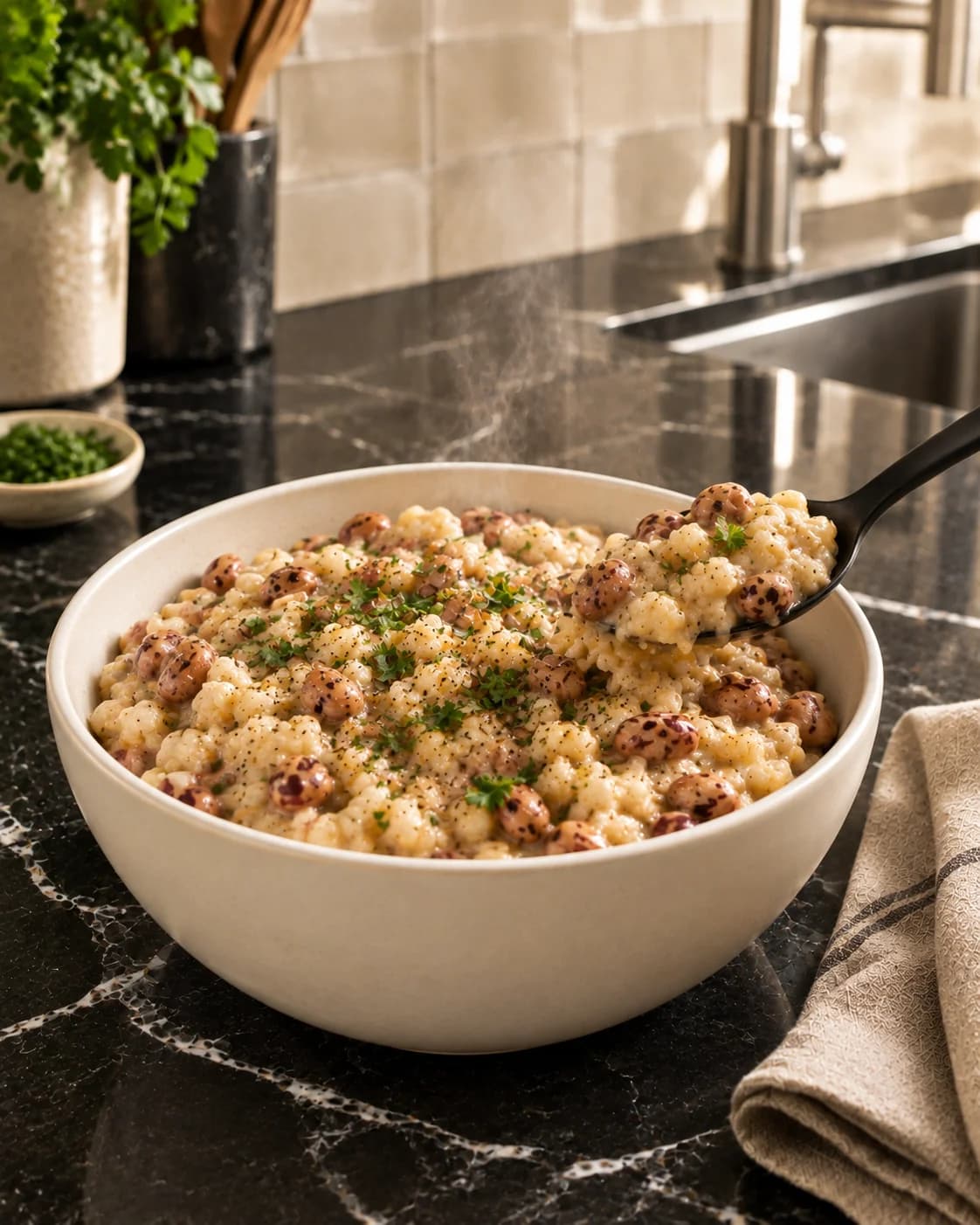
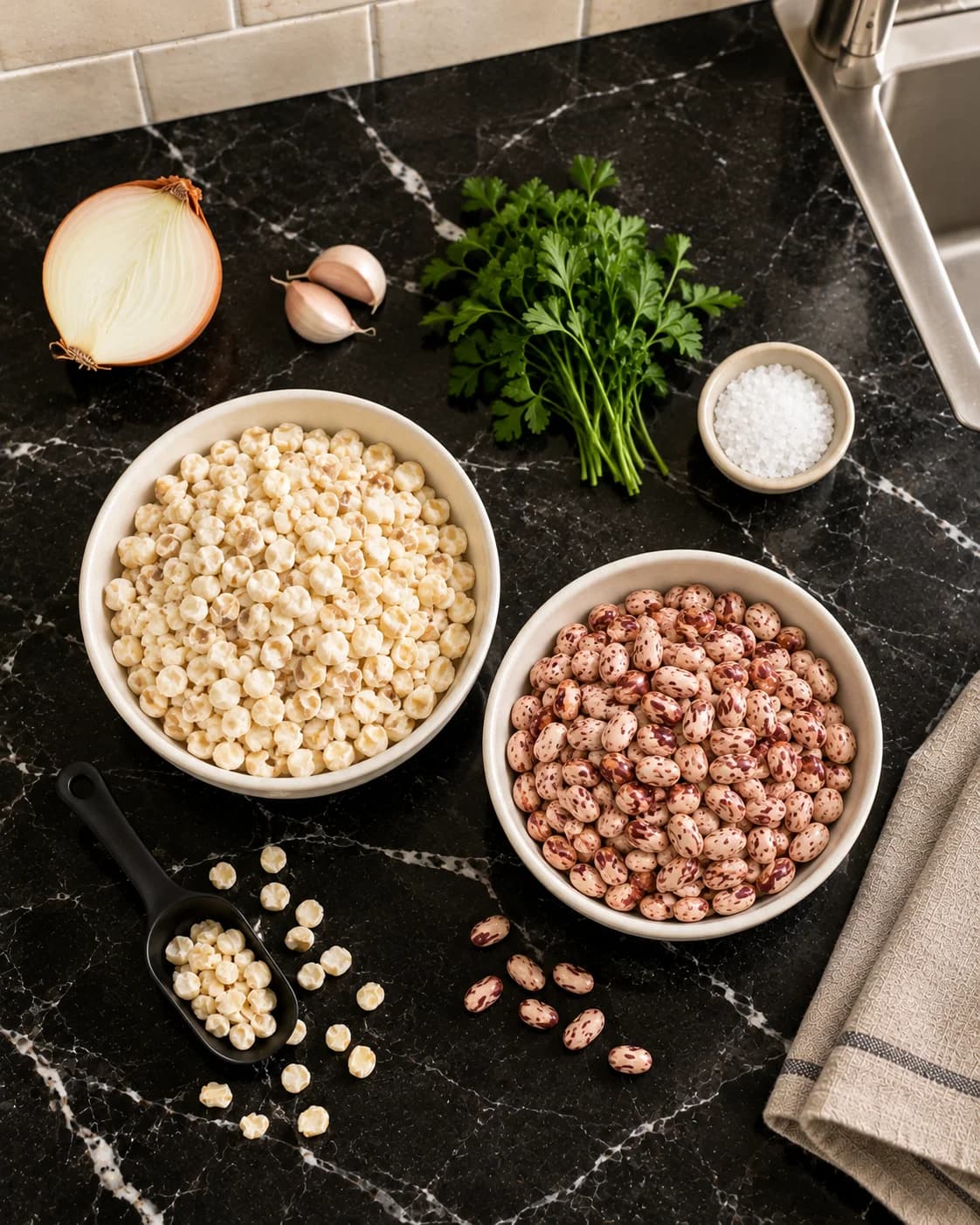
Samp and beans, known as umngqusho in isiXhosa, is one of the most loved traditional dishes in South Africa. It's made from samp (dried maize kernels that have been stamped or cracked) and dried beans, cooked slowly until soft and creamy. It's simple, affordable and filling, and for anyone who trains, it has more going for it than most people realise.
1. It's a smart plant protein combination
Maize and beans each have their strengths. Beans are rich in lysine, an essential amino acid that maize is low in, while maize supplies others that beans have less of. Eaten together, they give you a more complete amino acid profile than either on its own. If you read our piece on animal and plant proteins, this is exactly the kind of mixing we mentioned, and traditional cooking has been doing it for generations.
2. It gives you slow-release energy
Samp and beans is a high-fibre, carbohydrate-rich meal that digests slowly. That means steadier energy rather than a quick spike and crash, which is useful before a long session or as part of your recovery meal.
3. It's packed with fibre
Both samp and beans are good sources of fibre. Fibre keeps you fuller for longer, supports digestion and helps keep your gut healthy, which matters when you're eating enough to fuel your training.
4. It brings in important minerals
Beans contribute iron, magnesium, folate and potassium. Iron supports oxygen transport in the body, and magnesium plays a role in muscle function and energy production. Women who train regularly often need to pay extra attention to iron, and beans are an affordable way to help.
5. It's budget-friendly and feeds many
A single pot makes several portions, keeps well in the fridge and tastes even better the next day. That makes it a practical meal prep option for busy weeks.
How to make it work for your goals
Add protein: Serve it with grilled chicken, fish, eggs or lean meat for a higher-protein plate. Add greens: Pair it with morogo, spinach or steamed cabbage for extra vitamins and fibre. Go easy on the fat and salt: Traditional recipes often use oil, butter and stock cubes. A little goes a long way, and herbs, onion, garlic and spices add plenty of flavour. Watch the portion: It's energy-dense, so a cup or two on the plate is often enough, balanced with protein and vegetables.
A few tips before you cook
Soak first: Soak the samp and beans overnight to shorten cooking time and make them easier to digest. Cook beans fully: Dried beans must be boiled until completely soft. Never eat them undercooked. Start small: If you're not used to a lot of beans, introduce them gradually, as they can cause gas or bloating at first.
The bottom line
Samp and beans isn't a trendy superfood. It's a time-tested, nourishing meal that gives you plant protein, fibre and steady energy for very little money. Sometimes the best food for your training is already in your family's recipe book.
Is samp and beans a regular in your home? Tell us how your family makes it in the comments below.
Be the first to share your thoughts.