
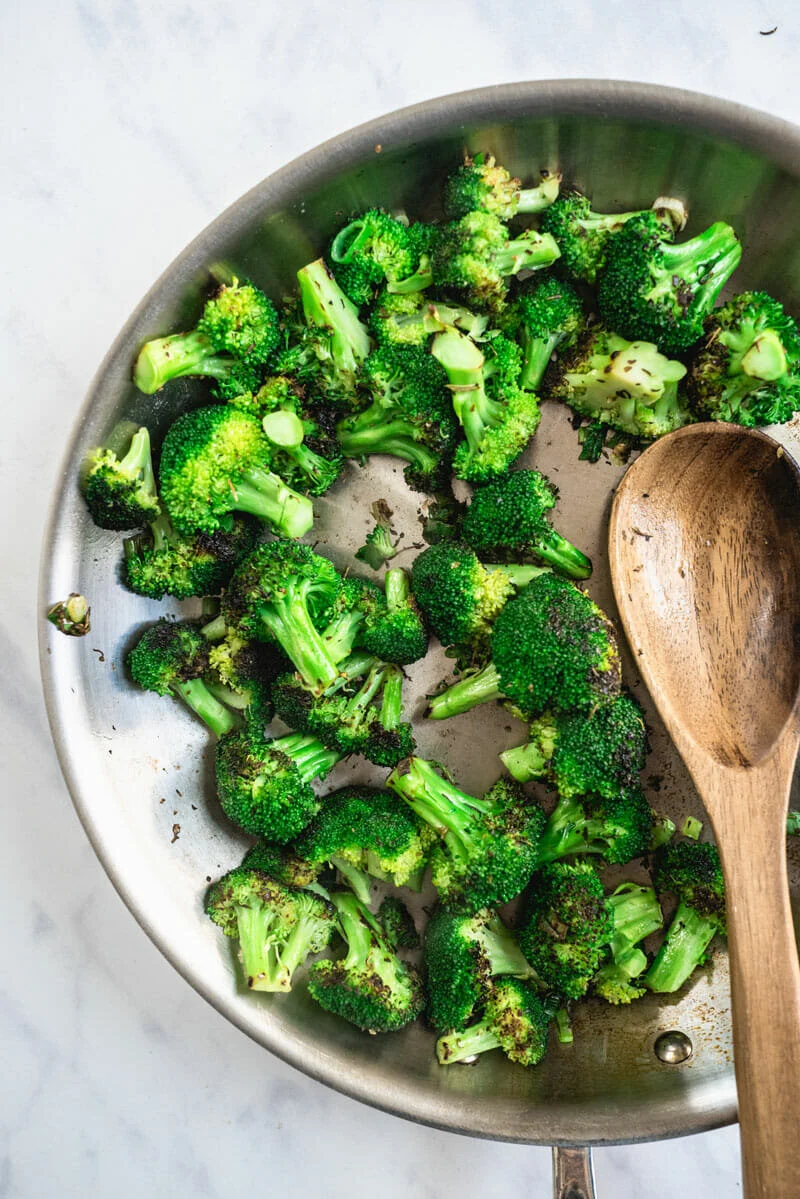
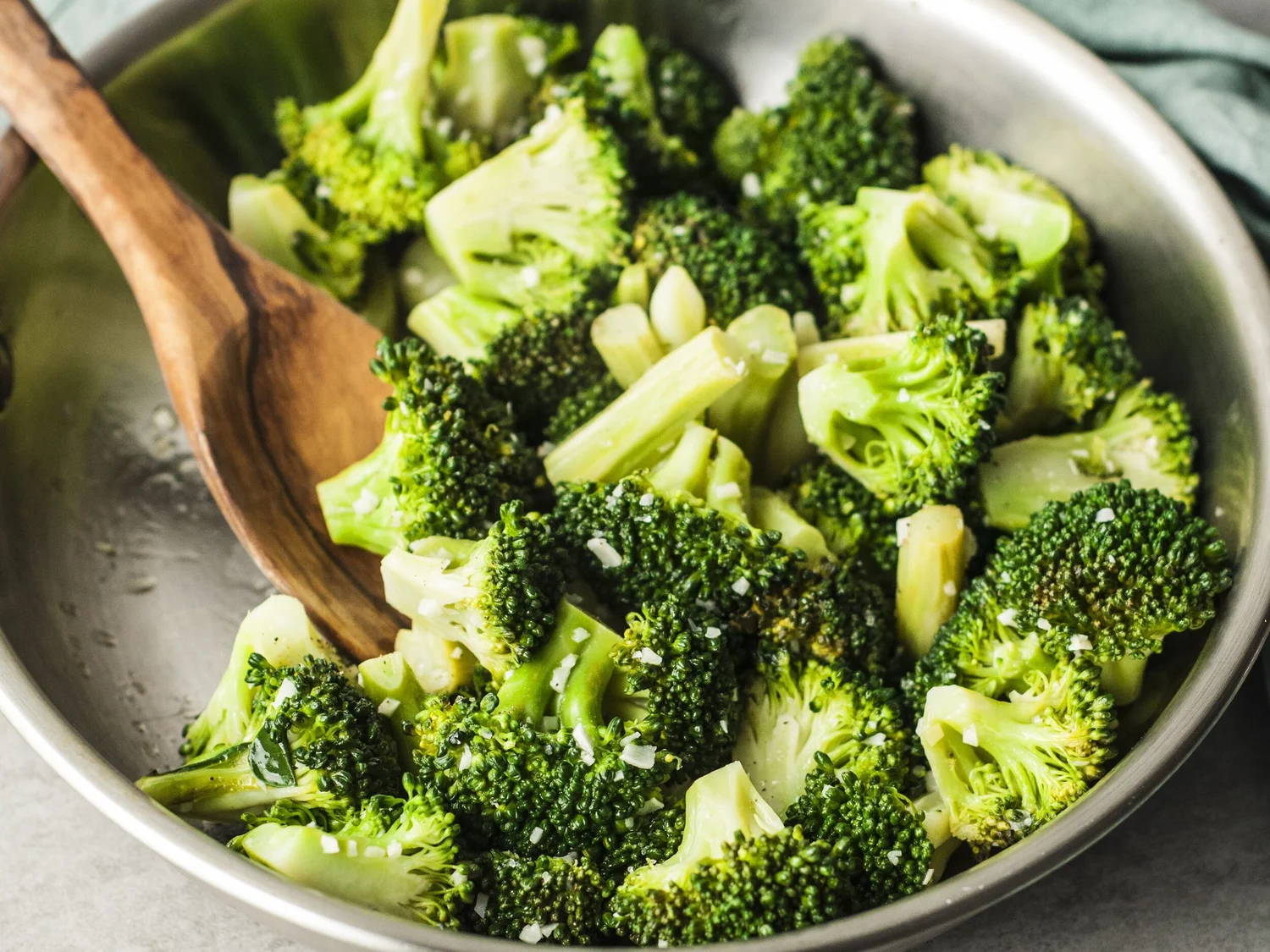
Broccoli is a nutrient-rich vegetable that may enhance your health in a variety of ways, such as by reducing inflammation, improving blood sugar control, boosting immunity, and promoting heart health. Below are 6 benefits in detail you should know about when eating broccoli regularly.
Including this nutritious vegetable in your healthy, balanced diet may help you achieve your health goals more easily.
1. Packed With Vitamins, Minerals and Bioactive Compounds
One of broccoli’s biggest advantages is its nutrient content. It’s loaded with a wide array of vitamins, minerals, fiber, and other bioactive compounds.
One cup (91 grams) of raw broccoli packs :
-
Carbs: 6 grams
-
Protein: 2.6 gram
-
Fat: 0.3 grams
-
Fiber: 2.4 grams
-
Vitamin C: 135% of the RDI
-
Vitamin A: 11% of the RDI
-
Vitamin K: 116% of the RDI
-
Vitamin B9 (Folate): 14% of the RDI
-
Potassium: 8% of the RDI
-
Phosphorus: 6% of the RDI
-
Selenium: 3% of the RDI
Broccoli can be eaten cooked or raw — both are perfectly healthy but provide different nutrient profiles.
Different cooking methods, such as boiling, microwaving, stir-frying and steaming, alter the vegetable’s nutrient composition, particularly reducing vitamin C, as well as soluble protein and sugar. Steaming appears to have the fewest negative effects. Still, raw or cooked, broccoli is an excellent source of vitamin C. Just half a cup (78 grams) of cooked broccoli provides 84% of the reference daily intake (RDI) — more than one-half orange can offer.
2. Contains Potent Antioxidants That Offer Health-Protective Effects
The antioxidant content of broccoli may be one of its main boons for human health.
Antioxidants are molecules that inhibit or neutralize cell damage caused by free radicals. This can lead to reduced inflammation and an overall health-protective effect.
Broccoli has high levels of glucoraphanin, a compound that is converted into a potent antioxidant called sulforaphane during digestion. Test-tube and animal studies indicate that sulforaphane may offer multiple health benefits, including reduced blood sugar, cholesterol levels, oxidative stress, and chronic disease development. However, more research is needed to understand its role in humans.
Broccoli also contains measurable amounts of the antioxidants lutein and zeaxanthin, which may prevent oxidative stress and cellular damage in your eyes.
3. Promotes Healthy Digestion and Reduced Constipation.
Broccoli is rich in fiber and antioxidants — both of which may support healthy bowel function and digestive health.
Bowel regularity and a strong community of healthy bacteria within your colon are two vital components to digestive health. Eating fiber- and antioxidant-rich foods like broccoli may play a role in maintaining healthy gut function. A study in mice on a broccoli diet found reduced levels of inflammation in the colon, as well as favorable changes in gut bacteria.
A recent human study indicated that people who ate broccoli were able to defecate more easily than individuals in the control group. Though these results are promising, more human research is needed to better understand how broccoli affects digestive health.
4. May Help Slow the Aging Process
The process of aging is largely attributed to oxidative stress and reduced metabolic function over the course of your lifespan. Though aging is an unavoidable natural process, diet quality is thought to be a major player in determining genetic expression and the development of age-related diseases.
Research shows that sulforaphane, a key bioactive compound in broccoli, may have the capacity to slow the biochemical process of aging by increasing the expression of antioxidant genes. Still, more human research is needed to determine a cause-and-effect relationship between dietary intake of broccoli and its effect on the aging process.
5. Vitamin C Content Supports a Healthy Immune System
The human immune system is complex and requires a multitude of nutrients to function properly. Vitamin C is arguably the most essential nutrient for immune function — and broccoli is loaded with it.
Research indicates that vitamin C plays a role in both the prevention and treatment of various illnesses. A daily intake of 100–200 mg of vitamin C seems to be sufficient to prevent certain infections. Typically, vitamin C is associated with oranges or strawberries, but broccoli definitely deserves credit — a half-cup (78-gram) serving of cooked broccoli boasts 84% of the RDI for this vitamin.
6. Nutrient Content May Support a Healthy Pregnancy
Your body requires a multitude of vitamins, minerals, and protein during pregnancy to support both baby and mother. Broccoli is a good source of B vitamins — namely B9, also known as folate.
Folate is an essential nutrient for the development of the fetal brain and spinal cord. Regular consumption of folate-rich foods like broccoli can help ensure healthy pregnancy outcomes. Additionally, some animal studies indicate that broccoli eaten by the mother may support the healthier cognitive development of the newborn. More research is needed to better understand how broccoli and its bioactive compounds may support healthier pregnancy outcomes.
Let us know what you think of this feature by leaving a comment in the comment section below and read more about the benefits of eating broccoli and so much more click the link below